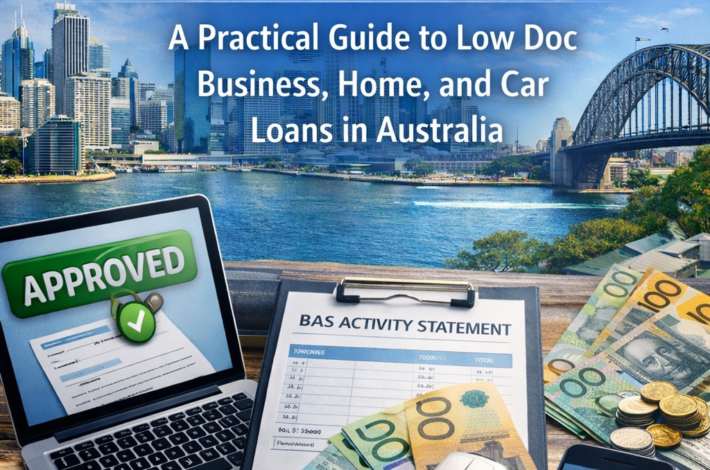

Securing credit through traditional banking channels is rarely straightforward for independent business operators, sole traders, and contractors. Conventional lenders require two consecutive years of fully lodged tax returns and audited financial statements paperwork that self-employed professionals often lack, either because their revenue is surging rapidly or because legitimate tax-minimization strategies suppress their taxable income. This documentation gap frequently stalls critical property purchases, business expansion, and equipment procurement.
Alternative lending structures bridge this gap. By utilizing flexible verification methods, low doc loans allow business owners to leverage true operational cash flow rather than historical tax filings to access growth capital.
What Is a Low Doc Loan And What Are Its Benefits?
A low documentation (low doc) loan is a specialized credit product designed for borrowers who have strong debt-servicing capacity but lack conventional PAYG payslips or recent tax returns. Rather than relying on traditional tax filings, specialist lenders assess serviceability using alternative financial records:
- Business Activity Statements (BAS): Typically covering the past 6 to 12 months to verify gross business turnover.
- Business Bank Statements: Demonstrating continuous trading revenue and cash flow health over a 6-to-12-month period.
- Accountant’s Declaration: A formal letter signed by a registered tax agent confirming the business’s ongoing solvency and projected income.
- Self-Declared Income Statement: A borrower declaration stating current annual earnings and repayment capabilities.
Industry Pro-Tip: Securing a low doc home loan does not mean bypassing credit checks or risk assessments. Lenders still evaluate your credit score, deposit size, and trading history, making clean banking conduct essential for securing competitive interest rates.
┌──────────────────────────────────────────────────────────┐
│              LOW DOC INCOME VERIFICATION PIPELINE         │
└────────────────────────────┬─────────────────────────────┘
                             │
       ┌─────────────────────┼─────────────────────┐
       ▼                     ▼                     ▼
┌──────────────┐      ┌──────────────┐      ┌──────────────┐
│ Business     │      │ 6-12 Months  │      │ Accountant   │
│ Activity     │      │ Trading Bank │      │ Solvency     │
│ Statements   │      │ Statements   │      │ Declaration  │
└──────────────┘      └──────────────┘      └──────────────┘
Strategic Comparison: Traditional vs. Low Doc Credit Facilities
Selecting the correct lending structure requires evaluating approval speed, documentation burden, and pricing parameters.
| Feature / Attribute | Full Documentation (Traditional) | Low Documentation (Alternative) |
| Primary Income Proof | 2 Years of Tax Returns + ATO Assessment Notices | BAS, Bank Statements, or Accountant Declaration |
| Approval Speed | 3 to 6 Weeks (Extensive manual underwriting) | 3 to 10 Business Days (Streamlined verification) |
| Deposit Requirements (LVR) | 5% to 20% Deposit (Up to 95% LVR) | 20% to 30% Deposit (Generally capped at 70–80% LVR) |
| Interest Rate Margin | Standard Commercial Benchmark | 0.50% to 1.50% Above Standard Base Rates |
| Target Borrower | PAYG Salary Earners & Established Entities | Sole Traders, Freelancers, & Fast-Growing SMEs |
7 Things to Know About Low Doc Business Loans in Australia
When applying for low doc loans to fund working capital or commercial property, keeping critical underwriting factors in mind will streamline approval:
- Active ABN Registration Requirements: Lenders require an active Australian Business Number (ABN) registered for a minimum of 12 to 24 months, along with active GST registration.
- Impact of APRA DTI Guidelines: Major banks enforce strict Debt-to-Income (DTI) caps, making non-bank lenders the primary funding source for self-employed applicants seeking flexible serviceability rules.
- BAS vs. Bank Statement Options: Providing 12 months of consecutive BAS statements often yields sharper interest rates than relying solely on bank statements or accountant declarations.
- Deposit Size Dictates Pricing: Maintaining a Loan-to-Value Ratio (LVR) below 70% lowers lender risk, often unlocking rates competitive with standard commercial products.
- Tax Deductibility of Interest: Interest expenses incurred on business-purpose loans are generally tax-deductible, offsetting higher nominal interest rates.
- Lenders Mortgage Insurance (LMI): Borrowing over 60%–70% of a property’s value on a low doc basis may trigger LMI premiums, which can be capitalized into the total loan amount.
- Refinancing Pathways: Many business owners use low doc funding as a short-to-medium term solution, later refinancing into standard full-doc products once two years of tax returns are lodged.
Low Doc Car Loans: What Are They and How Can They Benefit You?
Acquiring commercial vehicles or fleet machinery through traditional channels can stall operations while waiting for annual accounts to be finalized. Low doc asset finance provides a streamlined path to acquiring income-producing assets without delaying business expansion.
              ┌──────────────────────────────────────────┐
              │      LOW DOC CAR FINANCE ADVANTAGES       │
              └────────────────────┬─────────────────────┘
                                   │
         ┌─────────────────────────┼─────────────────────────┐
         ▼                         ▼                         ▼
┌──────────────────┐      ┌──────────────────┐      ┌──────────────────┐
│ Rapid Approval   │      │ Preserves Cash   │      │ Tax-Effective    │
│ & Settlement     │      │ Working Capital  │      │ Asset Depr.      │
└──────────────────┘      └──────────────────┘      └──────────────────┘
Core benefits for business operators include:
- Minimal Documentation Requirements: Approvals can often be secured using an active ABN, driving history, and a signed income declaration—eliminating the need for comprehensive financial statements.
- Preservation of Working Capital: Vehicle purchases can be financed with zero upfront deposit, keeping operational cash reserves intact for business growth.
- Tax-Effective Asset Structuring: Commercial vehicle finance (chattel mortgage) allows business owners to claim tax deductions on both loan interest and equipment depreciation.
- Fast Turnaround: Streamlined underwriting enables vehicle delivery within days, keeping sales teams, trade crews, and delivery routes fully operational.
Key Takeaway: Low doc financing shifts the credit assessment from historical tax records to real-time operational performance, helping self-employed Australians secure property, business assets, and growth capital without administrative delays.
Scaling Your Enterprise with Flexible Capital
Low documentation financing offers self-employed professionals, contractors, and business owners a practical path past rigid traditional lending hurdles. By assessing current cash flow through BAS statements and business accounts rather than historical tax returns, alternative facilities provide the liquidity needed to capture market opportunities. Evaluating your current trading position against alternative lending models allows you to unlock capital, acquire key assets, and scale your operations with confidence.